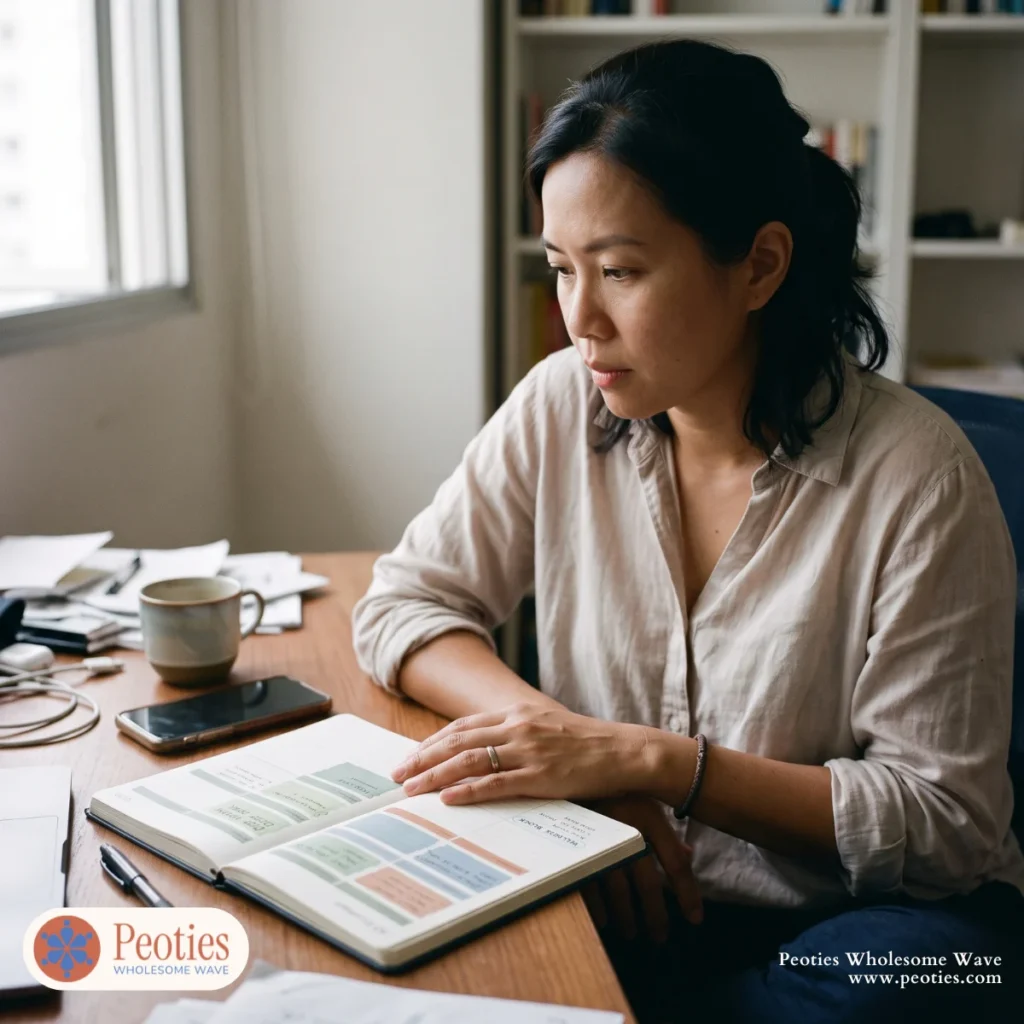

The most exhausted women I know are the ones who have mastered the art of being “productive” even while they are resting.
We are raised in Southeast Asia with the unspoken mandate that our value is inextricably linked to our output. We mistake “doing” for “being,” convinced that if we aren’t optimizing our downtime or planning our next pivot, we are somehow falling behind. We treat our bodies like high-performance machines that simply need a quick recalibration, rather than living systems that require genuine safety to function.
The real trap isn’t just the workload; it’s the inability to drop the armor when the laptop closes. In our culture, slowing down often feels like a moral failure, a luxury we didn’t earn. But true nervous system regulation isn’t about taking a spa day; it’s about teaching your body that it is safe to exist without a goal. High-achieving women here often live in a state of high-alert, carrying the weight of familial expectations and professional ambition simultaneously.
In practice, this means shifting from “managing” stress to “completing” the stress cycle through movement and stillness that serves no agenda. It’s the radical act of reclaiming your capacity to just *be*, without needing to justify the time spent.
Are you resting to recover, or are you resting to perform better tomorrow?
At Peoties Wholesome Wave, we hold space for the conversations that don’t fit into the typical corporate wellness narrative.